Why Phone Repair Is a Useful Hands-On Skill
Phone repair is one of those skills that stays useful no matter where consumer technology heads next. People crack screens, wear out batteries, and break charging ports every single day, and most would rather pay to fix a device they already own than replace it entirely. That makes repair a genuinely practical skill — one you can use on your own devices, help friends and family with, or turn into income.
It is also a skill that rewards understanding rather than memorization. Once you know how to safely open a device, diagnose a fault, and replace the right part, that process transfers across models and brands. The fundamentals of a screen repair, a battery replacement, or a charging port repair are remarkably similar from one phone to the next.
If you have ever wanted to turn that curiosity into competence, Phone Repair School offers a structured way to learn the right way, in person, from people who do this work every day.
Who the Training Is For
No prior experience is required to get started. The training is built for beginners, which means you do not need a technical background, prior repair experience, or any special tools to enroll. The only requirement is that students be at least 18 years of age.
That makes the courses a good fit for a wide range of people: hobbyists who want to fix their own devices properly, aspiring technicians looking for a marketable skill, people exploring whether a repair business makes sense for them, and even IT or operations staff who want hands-on device repair capability for their workplace. You do not have to want to open a shop to benefit — plenty of students simply want to stop paying for repairs they could do themselves.
What Students Learn
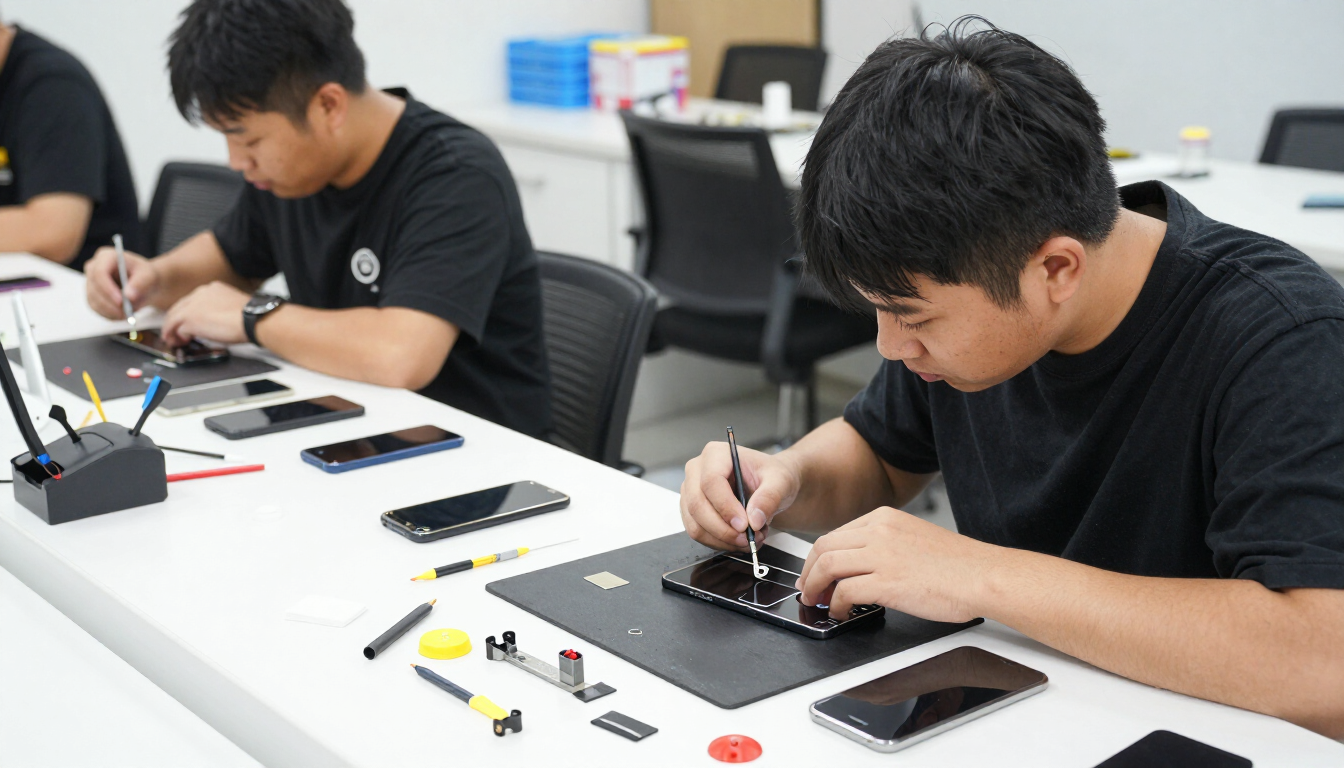
The training focuses on the repairs that make up the bulk of real shop work. Students get hands-on practice with the most common device faults rather than only watching demonstrations. Topics typically include:
- Screen and display replacement, including safe disassembly and reassembly.
- Battery testing and replacement.
- Charging port inspection and repair.
- Basic diagnostics — figuring out what is actually wrong before replacing parts.
- Safe handling of small components, flex cables, and adhesives.
- Reassembly and post-repair testing to confirm the device works.
Practice phones and parts are included, so you are learning on real devices rather than only studying theory. A certificate is provided on completion, which is useful if you want to show prospective employers or customers that you have completed structured training.
Why Hands-On Practice Matters
There is a big difference between watching a repair and actually doing one. A video makes a screen replacement look straightforward; doing it yourself teaches you how much heat to apply, how much pressure is too much, where the fragile flex cables sit, and how to avoid the small mistakes that turn a clean repair into a damaged device.
Hands-on practice is also where you build the muscle memory and confidence that make repairs faster and safer over time. That is exactly why our own phone repair work is diagnostic-first — understanding the fault and practicing the correct technique matters more than rushing to swap a part. The same principle applies to learning: repetition on real devices is what turns a beginner into someone who can work independently.
Learning in a Real Repair-Business Environment
One of the advantages of training through a school connected to an actual repair business is that you learn in an environment where real repairs happen every day. You see the kinds of devices, faults, and customer situations that a working shop actually handles — not a sanitized classroom scenario.
That context matters. It exposes you to the messy reality of repair: devices that arrive with multiple problems, parts that do not behave the way the manual suggests, and the judgment calls an experienced technician makes throughout the day. If you want that real-world setting, phone repair classes in Tustin put you in a working repair environment rather than a desk-and-slides course.
Beginner vs Professional Paths
Phone Repair School offers two main paths so students can choose the depth that fits their goals. The Fundamental course is a shorter introduction, while the Professional course goes further and adds business-relevant skills for people who want to do more than personal repairs.
| Course | Length | Tuition | Deposit |
|---|---|---|---|
| Fundamental | 2 days | $600 | $100 |
| Professional | 5 days | $1,000 | $150 |
Course overview. Deposits reserve your seat; the remaining balance is due as outlined by the school. Details are subject to change — confirm current pricing and dates directly.
Both courses are kept small — a maximum of 5 students per class — so each student gets meaningful instructor attention rather than getting lost in a large group. An optional tools package may be available for an additional charge for students who want to take their own kit home. Microsoldering training is also planned and coming soon for students who want to go beyond basic component repair; check the training programs page for the latest availability.
Business Skills for Aspiring Repair Shop Owners
Not everyone who learns phone repair wants to do it as a hobby. If you are considering turning the skill into a side income or a full repair business, the Professional course is designed with that path in mind and includes business skills alongside the technical training.
That matters because running a repair shop is about more than fixing devices. Pricing repairs, ordering the right parts, managing customer expectations, handling warranties, and building trust are all part of operating sustainably. You can read more about how we approach that side of the business on our About page — the same principles that make a shop reliable for customers are the ones a new technician needs to learn early.
Why Local, In-Person Training Can Be Valuable
Online tutorials are plentiful and free, but they cannot give you feedback on your technique or let you practice on real devices with an instructor present. Local, in-person training solves that. Phone Repair School is based in Tustin, California, making it accessible to students across Orange County — including nearby cities like Irvine, Santa Ana, Orange, Anaheim, and Costa Mesa — who want to learn without traveling out of the region.
Being local also means you can ask questions, get corrected in real time, and finish the course with a certificate in hand. For anyone searching for hands-on phone repair training in Orange County, learning in person from a Tustin-based school is a practical alternative to figuring it all out alone from videos.
What to Look for in a Repair School
If you are comparing options, a few things separate a worthwhile repair course from a weak one:
- Small class sizes, so you actually get instructor attention rather than watching from the back.
- Hands-on practice on real devices, not lectures alone.
- Practice phones and parts included, so you are not surprised by extra costs.
- Instruction from people who repair devices professionally, not just teach theory.
- A certificate on completion.
- Transparent, upfront pricing with a clear deposit structure.
Phone Repair School is set up to meet each of those points — small classes, real devices, experienced instructors, a certificate, and published course pricing.
How to Learn More and Enroll
Interested in learning the same skills used in a real repair shop? Visit Phone Repair School in Tustin to view current training options, course details and enrollment information.
If you have questions before you enroll — about which course fits your goals, what to expect, or anything else — you are also welcome to reach out through our contact page, and we will point you in the right direction.